A day in the desert: water and heat
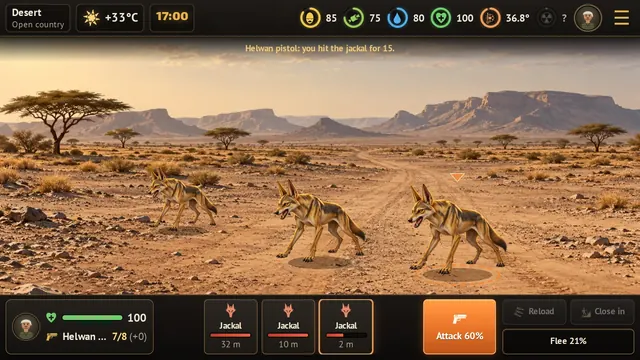
Hyenas are frightening, but what usually ends a run is thirst and the sun. Both creep up on you. This is what you need to know to get through a day.
Thirst
A survivor starts with decent water, but it drops all the time. It drops faster when you walk, faster still in a fight, and slower when you rest or sleep. If you walk from the start without drinking, the water is gone before the day is. After that it is your health that drops.
And one thing matters more: health only comes back while you are fed, watered and warm. So thirst does not just kill you. It also stops your healing.
Where to find clean water
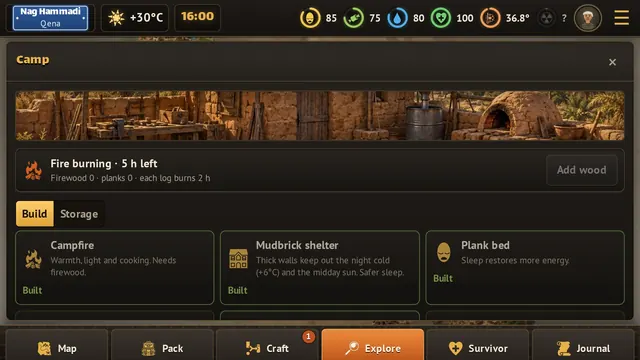
The wells in towns and oases are clean, so fill every empty bottle there before you leave. Canals and the Nile are dirty, and drinking from them raw risks dysentery, so boil it in a pot on a camp fire. Rehydration salts give back what heat and illness take. And at camp, a solar still pulls a little clean water from the ground and the night air.
The sun
The game does not just look at the temperature. It looks at what you feel. The more you exert yourself, the hotter you get: walking and fighting heat you up more than sitting. The midday sun in the open adds to it, and a heatwave adds more. When it is hot, these stack up, and you start with heat exhaustion and then heatstroke if you leave it.
Shade and a shelter ease the heat but do not remove it. A straw hat is the best shade you can carry, and a headscarf helps too. Heavy clothes are for the cold only. And cold kills like heat does: the desert freezes at night.
The khamsin
In spring the khamsin slows you badly. A face scarf or a mask softens it. So if you know one is coming, cover your face, and wait if you can.
A day in summer
- Fill every bottle from a well in the morning, before you leave the town.
- Walk from dawn until the sun climbs.
- At noon, sit in shade or a shelter.
- Go on when the heat eases, until sunset, and sleep in a town if you can.
- Boil canal water before you need it, not when you are thirsty.